Residential & Acreage · 7 min read
Tar and Chip Driveway Texas: Practical Paving for Ranch Properties
Blackland Asphalt Team · November 19, 2026
Building and maintaining a half-mile driveway across Collin or Denton County presents a hard financial reality. When you price out hot-mix asphalt or reinforced concrete for a long residential or agricultural lane, the numbers escalate rapidly into six figures. A tar and chip driveway texas property owners choose provides an engineered, all-weather running surface at a fraction of that capital outlay. For properties across the rapidly expanding corridor between Prosper, TX and Celina, TX, chip seal bridges the gap between dusty, unstable crushed stone and overpriced municipal-grade asphalt.
Chip seal is not an experimental or budget stopgap. State departments of transportation use this exact process to pave thousands of miles of farm-to-market roads across the state. When applied over a sound crushed-stone foundation, it locks down base material, sheds torrential Texas rain, and gives heavy trucks and livestock trailers dependable traction through every season.
Why Choose a Tar and Chip Driveway Texas Landowners Trust
Long driveways expose the budget weaknesses of both concrete and standard hot-mix asphalt. Standard four-inch reinforced concrete often runs between $10.00 and $15.00 per square foot installed. Hot-mix asphalt generally lands between $4.50 and $8.00 per square foot depending on site access, haul distances, and fuel surcharges. On a 1,500-foot driveway with a typical 12-foot width, standard asphalt paving demands a massive capital commitment.
In contrast, professional tar and chip paving typically runs $2.00 to $4.00 per square foot, assuming an existing, well-graded base. That price differential changes the math entirely for acreage parcels. You gain a consolidated surface that keeps mud off your vehicles without overcapitalizing a private roadway.
Beyond installation costs, chip seal delivers three clear operational advantages for working ranches and rural estates:
- Superior Wheel Traction: Hot-mix asphalt can become slick under wet conditions, especially when coated in fine field dust or livestock waste. Tar and chip leaves fractured stone exposed on the wearing surface, providing aggressive, sandpaper-like mechanical grip for horse trailers, dually pickups, and tractors.
- Natural Aesthetic: A stark black asphalt highway strip looks out of place winding through native prairie grasses, pastures, and pipe fencing. Chip seal uses natural aggregates, allowing you to match the drive to native limestone, brown river gravel, or granite tones.
- Heat Deflection: Fresh blacktop absorbs radiant solar heat, pushing summer surface temperatures beyond 140 degrees Fahrenheit. Light-colored aggregate reflects sunlight, keeping the driveway surface cooler under foot and gentler on working animals.
Managing North Texas Blackland Clay Under Long Driveways
Pavement does not fail from the top down; it fails from the subgrade up. In North Texas, the native soil is Houston Black clay, the signature material of the Blackland Prairie. This soil features some of the highest shrink-swell potentials of any subgrade in North America. During wet winters and spring storms, the clay absorbs moisture, expands, and heaves. During hot, dry summer stretches, it loses volume, shrinks, and develops deep surface fissures.
Rigid pavements like unreinforced concrete snap under these shifting support conditions. Hot-mix asphalt is flexible, but when laid in thin residential profiles over unconditioned clay, it reflects every deep ground crack straight through the surface.
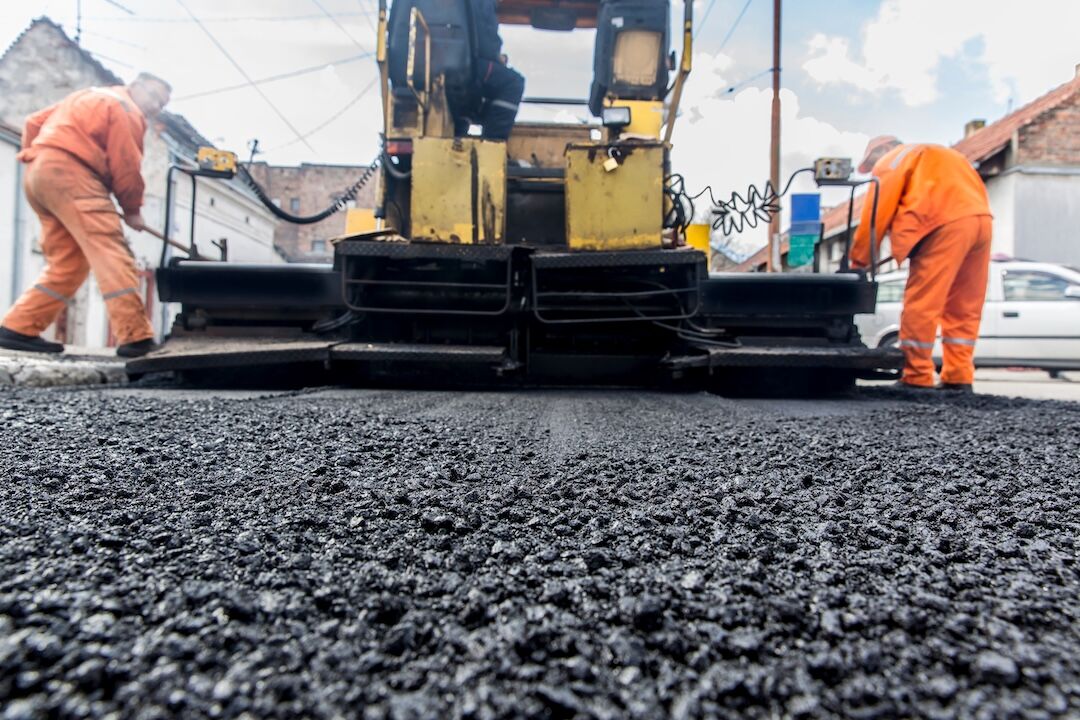
A tar and chip driveway handles this soil movement exceptionally well because it is an inherently flexible pavement system. It consists of a heavy application of polymer-modified liquid asphalt emulsion topped immediately with clean, fractured aggregate, then seated with a multi-ton pneumatic roller. Because the binder remains pliable, the surface adjusts slightly to thermal and moisture-related subgrade movements without developing catastrophic fault lines.
However, you cannot shoot liquid asphalt directly onto native dirt and expect it to hold. For a successful installation over active clay, the road profile requires:
- Site Clearing and Proof Rolling: Stripping topsoil and organic matter to reach stable subsoil, followed by proof rolling with heavy equipment to locate soft pumping zones.
- Moisture Control and Geotextile Fabric: Installing heavy-duty woven geotextile fabric directly over the clay. This fabric prevents expensive rock from sinking into wet subgrade mud while allowing drainage.
- Crushed Limestone Base: Installing six to eight inches of compacted aggregate base, such as TxDOT Grade 1 or 2 crushed limestone, compacted in uniform lifts to 95 percent standard Proctor density.
- Crown and Drainage Ditches: Shaping the road base with a minimum two percent cross-slope from the center crown out to broad bar ditches. Water that sits on top of or alongside a chip seal drive will soften the base and destroy the road.
The Installation Process: Liquid Binder and Aggregate Selection
A proper chip seal requires tight coordination, the right ground temperatures, and clean rock. We install tar and chip only when ambient temperatures and road base temperatures remain steadily above 60 to 70 degrees Fahrenheit, ensuring the asphalt binder wets out and holds the stone.
First, a computerized asphalt distributor truck shoots liquid asphalt binder, commonly a high-performance polymer-modified emulsion like CRS-2P or an AC-15P asphalt cement, at a precise application rate. This rate typically ranges between 0.35 and 0.50 gallons per square yard, calibrated to the size of the stone and the porosity of the base.
Second, an aggregate chip spreader follows within seconds of the distributor, applying clean, pre-screened stone before the emulsion cools or breaks. The aggregate must be dry and free of excessive clay fines; dust on the rock prevents the binder from bonding to the stone faces.
Third, rubber-tired pneumatic rollers make multiple passes over the fresh rock. Steel drum rollers should be avoided for primary seating because they crush the rock points and bridge over low spots. Pneumatic tires knead the individual stones directly into the liquid binder, orienting them on their flattest side.
For Texas properties, stone selection sets both the durability and the finished appearance:
- Crushed Texas Limestone: The regional standard. Readily available, cost-effective, and light gray to off-white in color. It fractures into sharp, angular edges that interlock tightly.
- Granite Chips: Pink or gray decomposed granite aggregates provide exceptional hardness. They resist crushing under heavy construction traffic, though material haul costs add to the project total.
- Brown or Pea Gravel: Rounded river gravel provides a rustic country lane look, but round stones lack angular edges. For heavy agricultural traffic, we specify crushed, fractured river rock over round river gravel to prevent aggregate roll and tire washboard.
On high-traffic farm roads, a two-course treatment (double chip seal) provides double the wear layer. The crew shoots a primary layer with larger stone (TxDOT Grade 3 or 4), sweeps loose rock, shoots a second layer of binder, and caps it with smaller stone (TxDOT Grade 5). This creates a dense, interlocked, weatherproof mat roughly five-eighths of an inch thick.
Long-Term Maintenance and Lifecycle Costs
A well-built double tar and chip driveway delivers a ten- to fifteen-year service life before requiring a rejuvenation shot. Unlike standard asphalt, which requires petroleum-based asphalt sealers every three to five years to stave off oxidation, a chip seal requires virtually zero routine surface maintenance.
You do not sealcoat tar and chip. When the aggregate eventually wears down or the underlying asphalt oxidizes after a decade of hard Texas sun, restoration is simple. You do not mill or tear up the road. Instead, your contractor cleans the existing surface, repairs any localized depressions, shoots a fresh layer of binder, spreads new stone, and rolls it down. The old driveway serves as an upgraded base for the new wearing course.
For landowners dealing with washouts, ruts, and constant dust on long gravel lanes in North Texas, chip seal stops the cycle of grading, watering, and rock replacement. It turns a high-maintenance farm trail into a permanent, commercial-grade surface built to take the punishment of Texas weather and heavy machinery.
Frequently Asked Questions
How long does a tar and chip driveway last in North Texas?
A properly constructed two-course tar and chip driveway built over a compacted, well-drained six-to-eight-inch crushed stone base lasts between 10 and 15 years under typical ranch and residential traffic. When the stone eventually wears down, the road can be resurfaced with a single chip seal cap without ripping out the existing foundation.
Can you install tar and chip over an existing caliche or gravel driveway?
Yes, existing gravel, crushed limestone, or caliche drives often make excellent foundations, provided they are structurally sound and have adequate thickness. The existing driveway must be graded to eliminate ruts and potholes, shaped with a proper center crown, and re-compacted with a heavy roller before spraying the liquid asphalt binder.
Can you clear snow or drag heavy implements across a chip seal driveway?
Chip seal handles farm equipment, dually trucks, and livestock trailers with ease, but dragging scraper blades or unmounted steel buckets directly against the surface can dislodge the embedded stone. Snow plow blades should be fitted with rubber or polyurethane cutting edges and kept adjusted slightly above the aggregate level to avoid gouging the seal.