Asphalt Overlays in Dallas–Fort Worth, TX
Asphalt Overlays
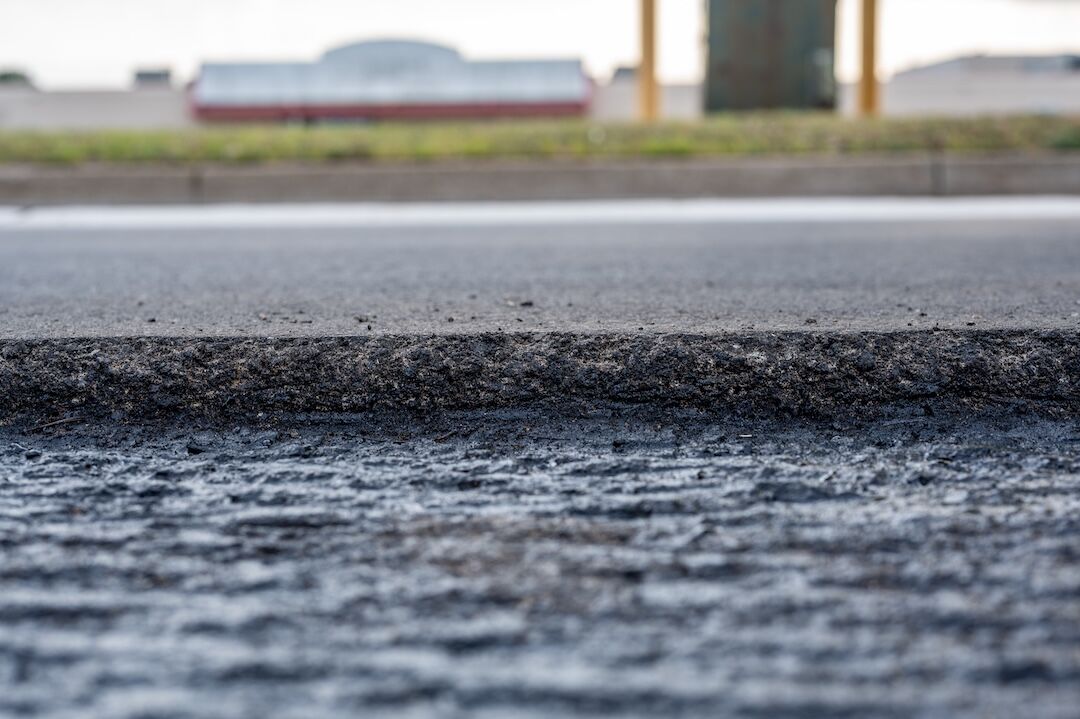
An overlay puts a new asphalt surface over pavement that is worn out on top but structurally intact underneath. Done on the right lot, it buys twelve to fifteen years for roughly half the cost of reconstruction.
Done on the wrong lot, it is the most expensive two years of pavement you will ever buy. The whole job of a good contractor here is telling you which one you have.
When an Overlay Works (and When It Won't)
An overlay works when cracking is surface-level, the base is firm under a proof roll, drainage is close to correct and there is room to raise the surface without burying curbs and inlets.
It does not work when the pavement is alligatored across large areas, when potholes keep returning in the same places, when the lot holds water after every rain, or when cores show a wet, pumping base. Those are subgrade failures, and asphalt placed on top of them cracks through within a season or two.
We core before we quote. If the answer is reconstruction, you get told that with the core photos attached, not after the mat is down.
Asphalt Overlay Cost
Commercial overlays in Dallas-Fort Worth generally run in the low-to-mid single digits per square foot, with the spread driven by mat thickness, how much milling is needed at edges and structures, how much full-depth patching has to happen first, and lot size.
The line items that move the number most are patching and milling, not the asphalt itself. A lot needing fifteen percent patching costs far more than one needing two percent, and that is the number worth getting right in an estimate.
Compare it against reconstruction on cost per year of service life rather than sticker price. An overlay at half the cost that lasts a third as long is not a savings.
What a Proper Overlay Includes in Dallas–Fort Worth
Every line item, spelled out.
Coring and base evaluation
Cores and proof-rolls before the proposal, so the recommendation rests on what the pavement actually is.
Full-depth patching first
Every failed area saw-cut, removed and rebuilt before the overlay. Paving over failure guarantees reflective cracking.
Edge and transition milling
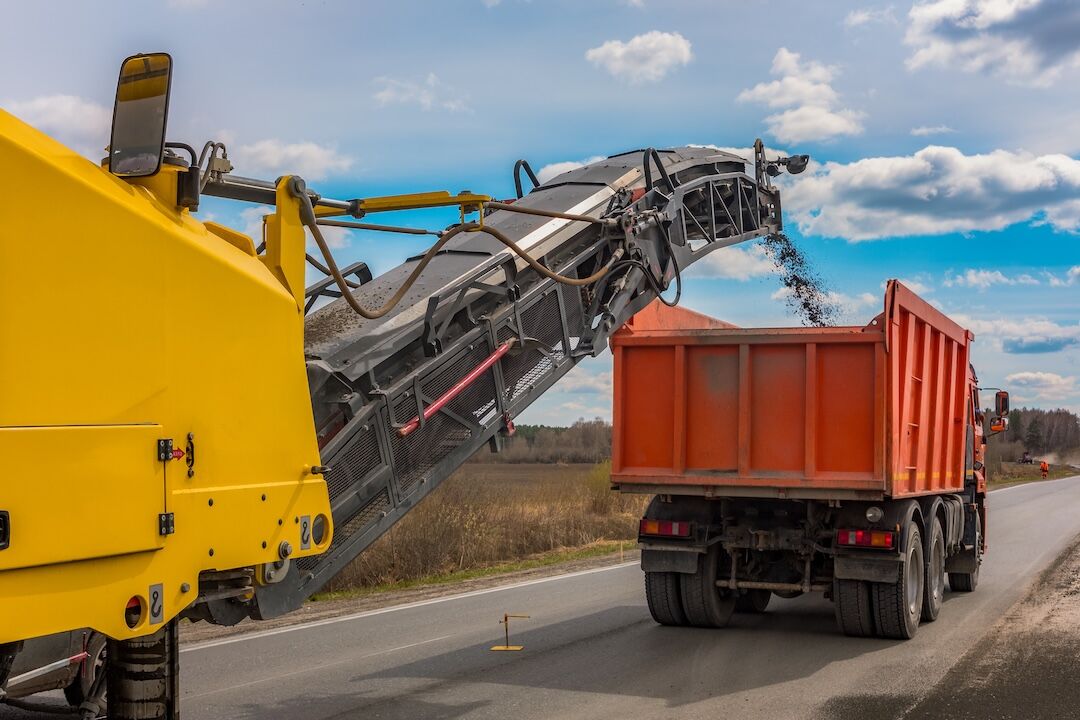
Milling at gutters, entrances and doorways so the new mat ties in flush and drainage is preserved.
Crack preparation
Working cracks cleaned and sealed, so movement below telegraphs through the new surface as slowly as possible.
Tack coat and paving
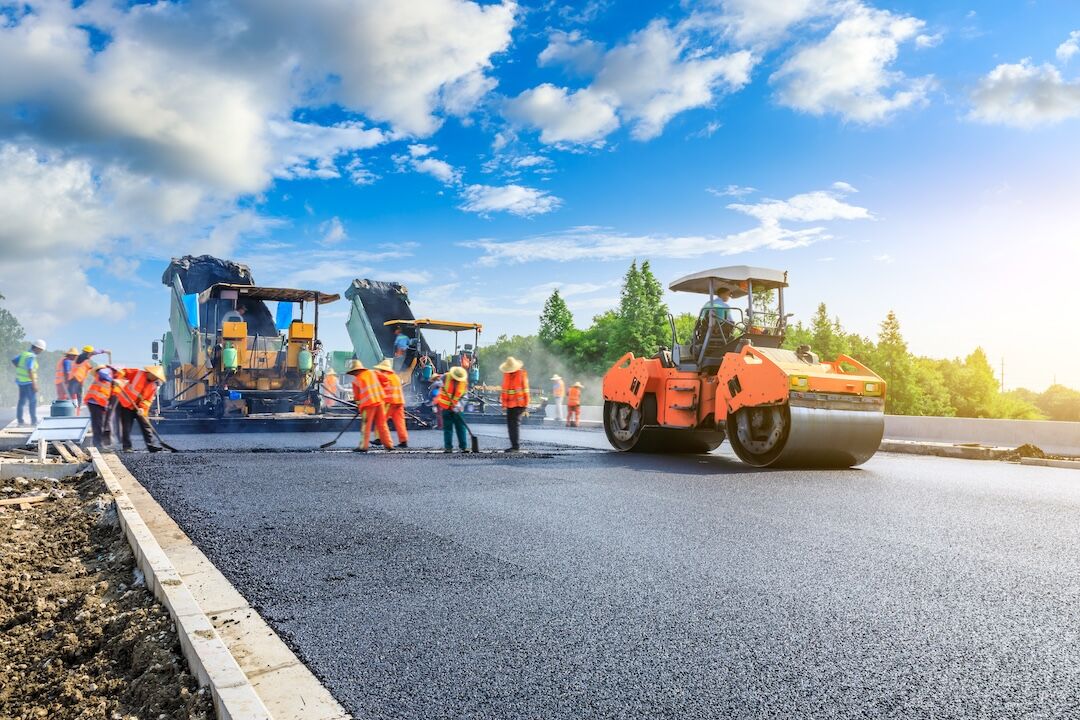
Uniform tack, correct mat temperature and documented rolling pattern. Bond and density are what make an overlay last.
Restriping and ADA reset
Full layout restored with compliant accessible stalls, access aisles, signage and fire lane markings.
Asphalt Overlays in Dallas–Fort Worth
On the job, on your property.
Reflective Cracking on Blackland Clay
Built for the soil under your lot.
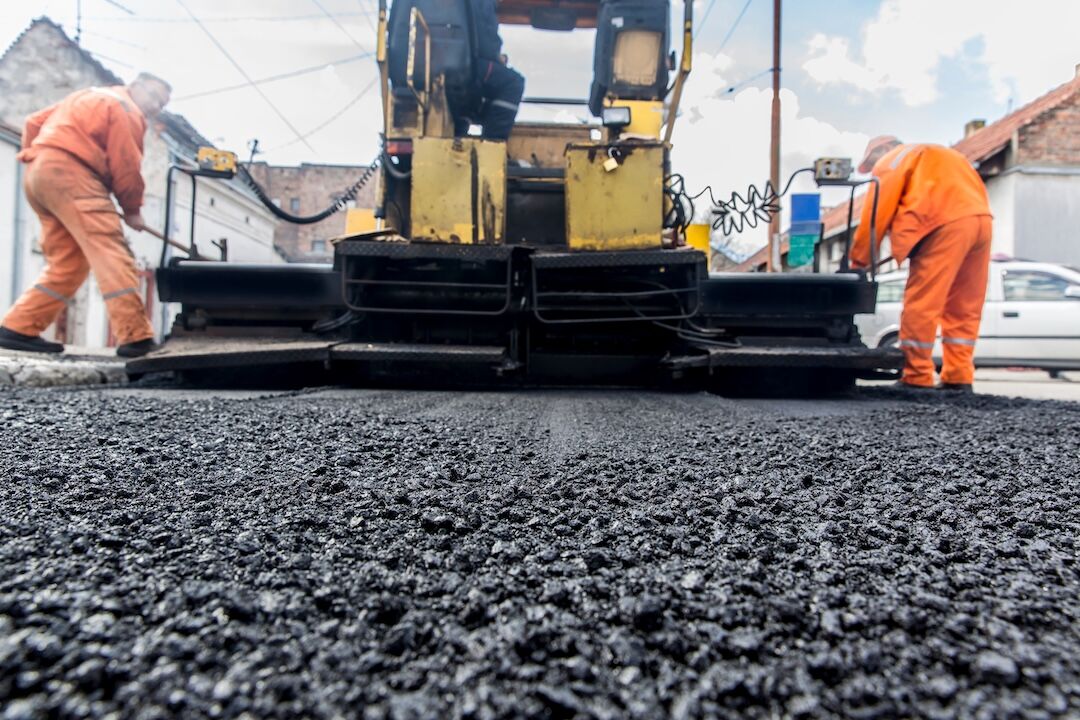
The reason overlays get a bad reputation in North Texas is reflective cracking. The clay under the lot keeps moving seasonally, the old cracks keep opening and closing, and that movement telegraphs up through the new asphalt.
You cannot stop it entirely, but you can slow it down a lot: patch the structural failures first, seal the working cracks, keep water out of the base, and use enough mat thickness to bridge minor movement. Skipping those steps is what turns a fifteen-year overlay into a three-year one.
Our Overlay Process in DFW
No surprises from first walk to final roll.
- 01
Assess
Cores, proof roll, drainage review and a distress map of the whole lot.
- 02
Plan
Patch quantities, milling limits, mat thickness and a phasing plan that keeps the property operating.
- 03
Repair
Full-depth patching and crack preparation completed and inspected before any resurfacing.
- 04
Overlay
Mill, tack, pave, compact, then restripe. Lot back in service on the schedule we committed to.
Asphalt Overlay FAQ
Straight answers before you call.
- How thick should an asphalt overlay be?
- Most commercial overlays are one and a half to two inches compacted. Heavier truck traffic areas need more, and anything under an inch and a half will not hold up on clay.
- How long does an asphalt overlay last in DFW?
- Twelve to fifteen years on a sound base with maintenance. Without crack sealing and sealcoating on cycle, expect closer to eight.
- Can you overlay a lot that has potholes?
- Only after the potholes are repaired full depth. A pothole is a base failure showing through, and an overlay does nothing for it.
- why parking lots crack in North Texas
- How soon can we drive on a new overlay?
- Usually the same day once the surface has cooled, typically within a few hours. Striping needs additional cure time, so we phase layout to match how the lot is used.
Related services
Where we work
Free Pavement Assessment in Dallas–Fort Worth
Ready to talk asphalt overlays?
On-site walkthrough, photo documentation, a written condition report and a five-year maintenance forecast. No cost, no pressure.