Sealcoating in Dallas–Fort Worth, TX
Sealcoating
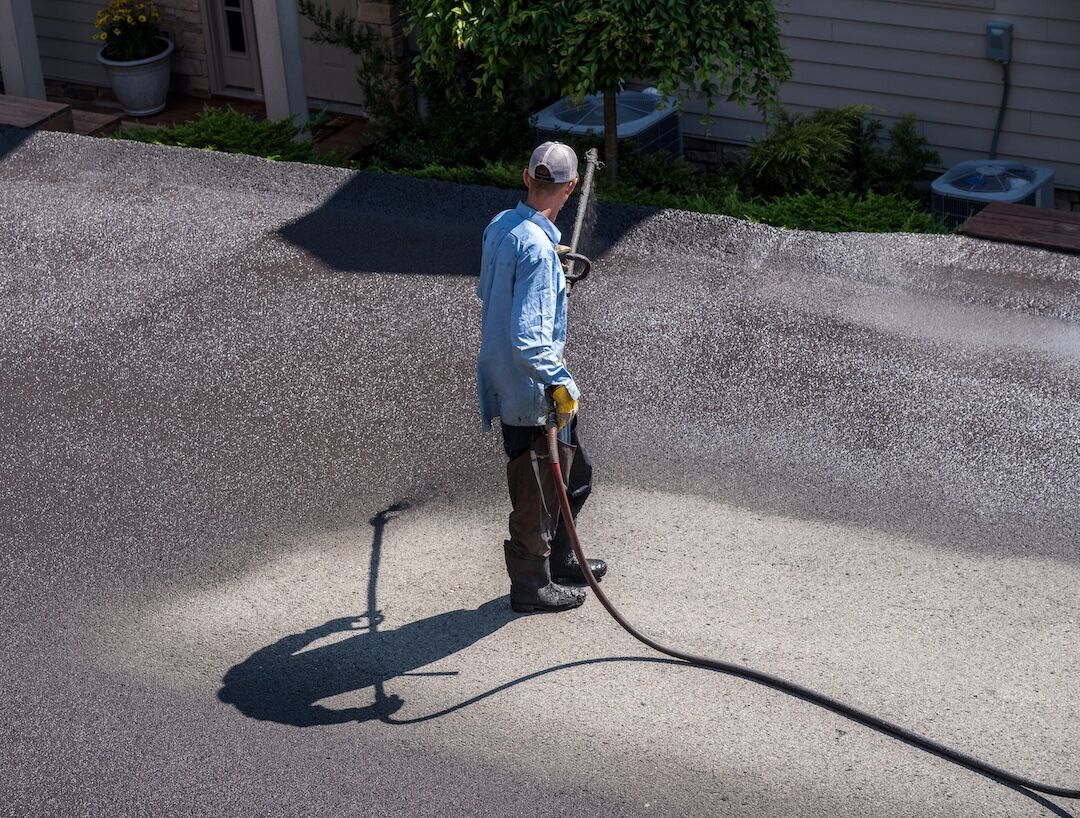
Sealcoating is the cheapest pavement work you will ever buy and the easiest to skip. It is a wearing surface that takes the UV, oxidation and fluid damage so your asphalt does not.
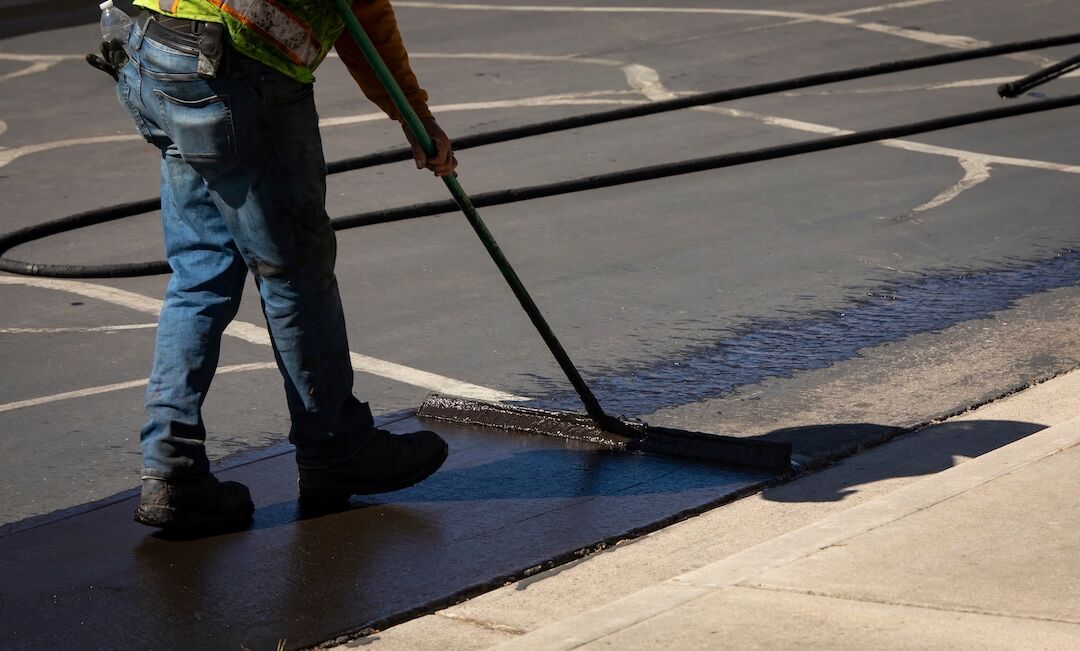
We spray or squeegee commercial lots, HOA streets, church campuses and driveways on a two to three year cycle, always after crack sealing and repairs are done.
Commercial Parking Lot Sealcoating in Dallas–Fort Worth
Every line item, spelled out.
Surface preparation
Blowing, sweeping, wire-wheeling edges and cleaning oil spots so the seal actually bonds.
Oil spot primer
Contaminated areas get primed. Sealer will not stick to a decade of drip pan.
Crack sealing first
We do not seal over open cracks. That is cosmetic work that buys nothing.
Two-coat application
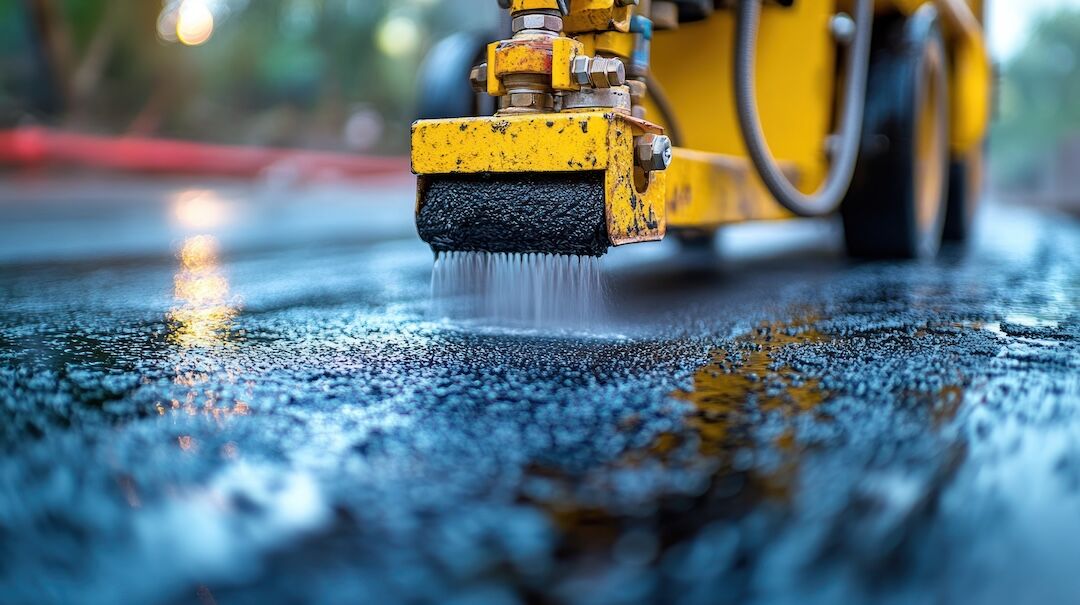
Commercial-grade sealer with sand additive for traction and wear in drive lanes.
Edge and detail work
Hand cutting at curbs, islands and building edges for clean lines.
Restriping
Full layout restripe after cure, with ADA stalls brought up to current standards.
Sealcoating in Dallas–Fort Worth
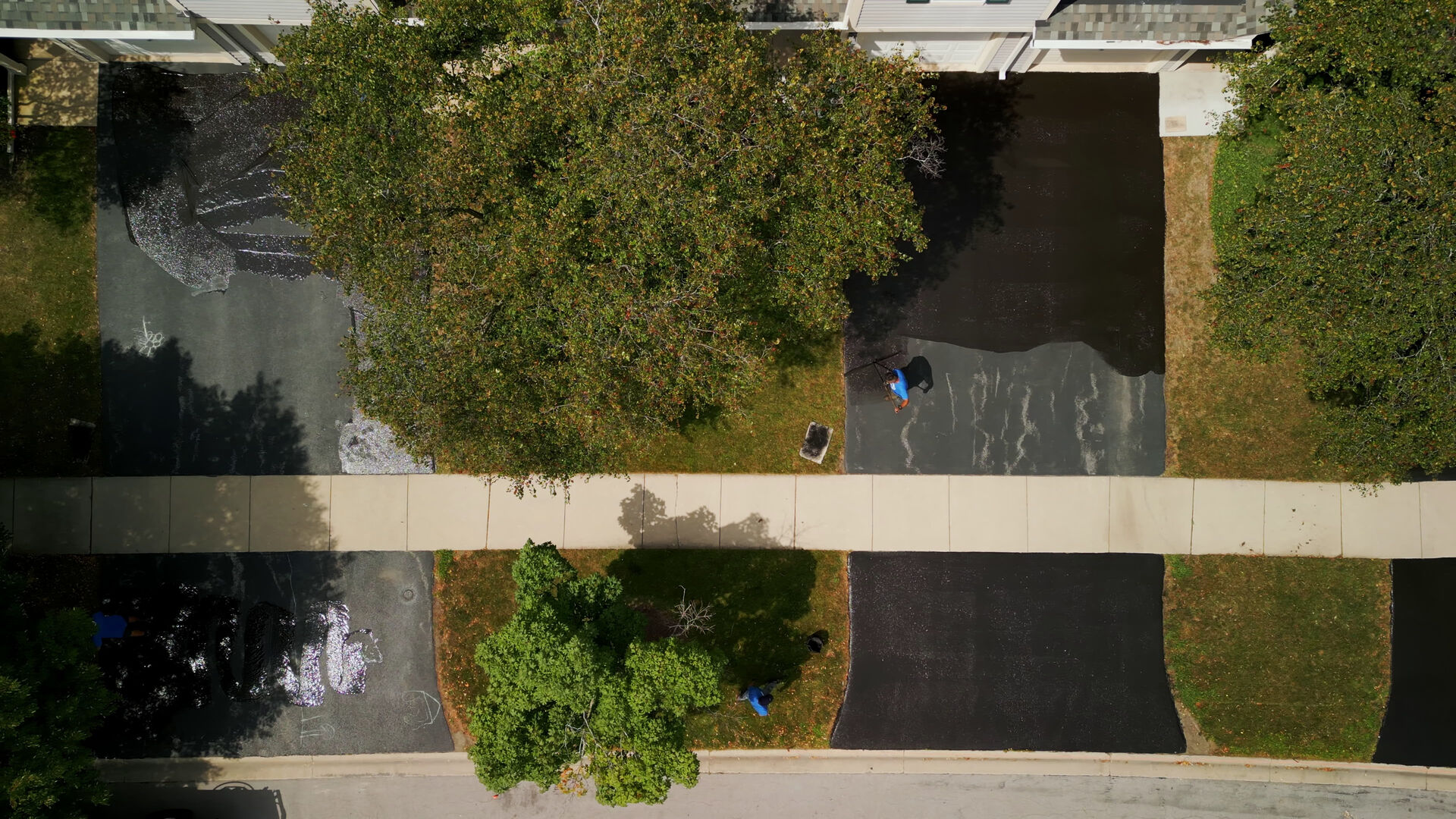
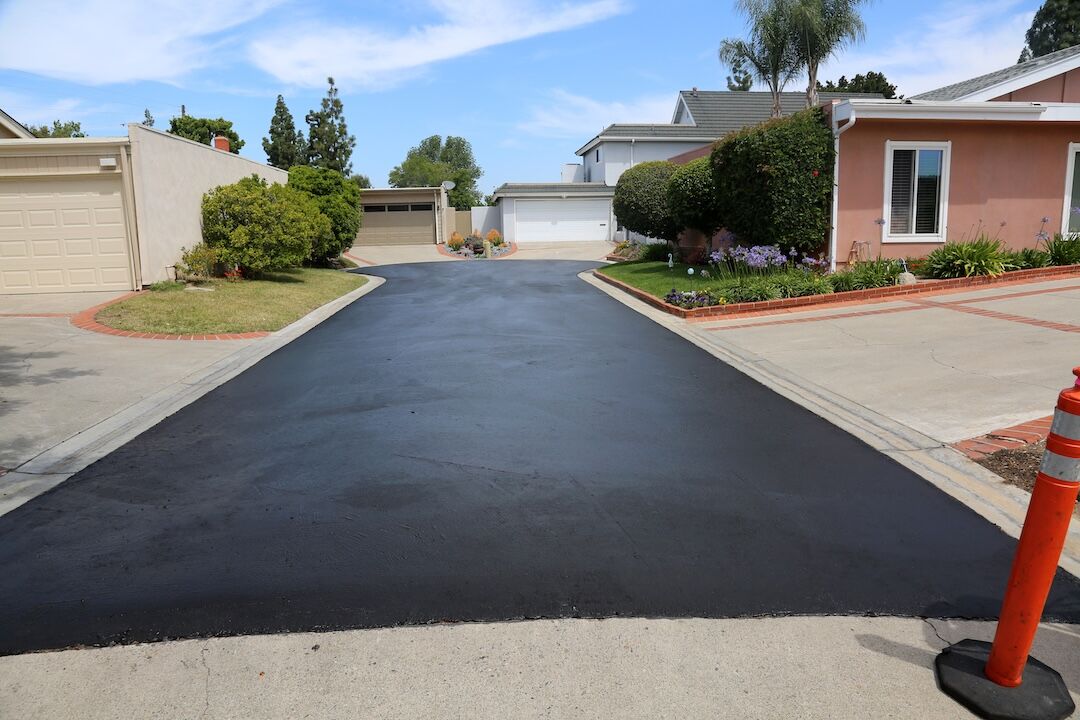
On the job, on your property.
How Much Does Sealcoating Cost?
Commercial parking lot sealcoating in DFW generally runs about $0.18 to $0.32 per square foot for a two-coat application, with small or heavily detailed lots landing at the top of that range. Oil-spot priming, crack sealing and restriping are priced separately.
It is the cheapest square-foot number on any pavement proposal, and the one that most reliably pushes a resurfacing further out.
How Often Should You Sealcoat in Texas?
Every two to three years for most commercial pavement in North Texas. Full-sun lots, truck traffic and drive-through lanes push that toward two; shaded low-traffic bays can stretch to three.
Texas UV and surface temperatures well above 130 degrees oxidize an unsealed surface fast, and an oxidized surface admits water long before it looks worn out.
Sealcoating + Crack Sealing Together
Sealer is not a crack filler. Spraying over open cracks looks good for a month and buys nothing structurally, which is why every sealcoating scope we write has crack sealing in front of it.
Done in the right order, the two together give you a continuous water barrier: sealed cracks stop the direct path into the clay, and the sealed surface stops the slow soak.
Sealcoating Is Water Control on Blackland Clay
Built for the soil under your lot.
In most markets sealcoating is mostly about UV and looks. Here it is about keeping water out of the soil under your lot. Every gallon that soaks into Blackland clay is one more swell-shrink cycle pushing on your pavement.
A sealed, crack-free surface sheds North Texas thunderstorms toward your inlets instead of into the subgrade. That is the whole game.
Our Sealcoating Process in DFW
No surprises from first walk to final roll.
- 01
Assess
Confirm the pavement is a candidate. Badly oxidized or failing asphalt needs repair first.
- 02
Plan
Phase the lot so tenants keep access, usually in halves or quadrants.
- 03
Apply
Prep, prime, seal, cure and stripe on a posted schedule.
- 04
Maintain
Set the next cycle date, typically 24 to 36 months out.
Sealcoating FAQ
Straight answers before you call.
- How often should a commercial lot be sealcoated?
- Every two to three years in DFW. Heavy truck traffic and full sun exposure push it toward two.
- How long is the lot closed?
- Usually 24 hours per phase for cure. Most retail and office jobs are phased overnight and on weekends.
- Does sealcoating fix cracks?
- No. Sealcoating protects sound pavement. Cracks are sealed separately before the sealer goes down.
- What time of year is best?
- Roughly April through October, when overnight temperatures stay above 50 degrees for a proper cure.
Related services
Where we work
Free Pavement Assessment in Dallas–Fort Worth
Ready to talk sealcoating?
On-site walkthrough, photo documentation, a written condition report and a five-year maintenance forecast. No cost, no pressure.