Maintenance · 7 min read
Resurface vs Replace Parking Lot: Making the Call on DFW Asphalt
Blackland Asphalt Team · October 20, 2026
Every commercial property manager eventually faces the choice between an overlay and total reconstruction. When deciding whether to resurface vs replace parking lot asphalt, the decision usually comes down to an immediate capital expense comparison. A standard two-inch overlay might run $2.50 to $4.00 per square foot, while a full tear-out and subgrade rebuild can easily hit $8.00 to $14.00 per square foot. Taking the cheaper bid looks great on a quarterly spreadsheet, but putting a fresh wearing course over a compromised foundation is the fastest way to waste fifty thousand dollars. In North Texas, the subgrade makes that decision for you.
The Core Problem: How Blackland Clay Dictates Pavement Life
The Dallas-Fort Worth metroplex sits on the Texas Blackland Prairie, an expansive clay formation notorious among civil engineers and geotechnical labs. This clay carries a high Plasticity Index (PI), often testing between 40 and 65. When wet, it expands with tremendous hydraulic force. When dry during our 100-degree summers, it shrinks, fissures, and pulls away from the edges of curbs and pavement structures.
If water penetrates the asphalt surface, it saturates this clay subgrade. The soil turns to mush, losing its California Bearing Ratio (CBR) strength. Heavy delivery trucks and trash haulers roll over the surface, and the subgrade deflects. The flexible asphalt flexes beyond its tensile limit, cracking into an interconnected pattern known as alligator cracking.
If you overlay alligator cracking without fixing the underlying base failure, those cracks will mirror through the new surface in less than eighteen months. That is reflective cracking, and no amount of tack coat or polymer-modified asphalt will stop it once the foundation underneath begins to move.
Resurface vs Replace Parking Lot: The Three Decision Rules
Contractors who want a fast, easy check will quote an overlay without picking up a core drill. Professional pavement management requires objective metrics. Here are the three non-negotiable rules we use to decide between rehabilitation and full replacement.
1. The 30 Percent Rule
Walk your lot and measure the square footage of structural distress. Structural distress includes deep alligator cracking, rutting deeper than one-half inch in the wheel paths, soft spots where the asphalt pumps under tire load, and settled depressions around catch basins.
If structural distress covers less than 25 to 30 percent of the total parking area, the lot is a candidate for rehabilitation. You mill the surface, perform full-depth asphalt base repairs on the failed zones, and install commercial asphalt overlays across the entire property. If structural failure exceeds 35 percent of the surface area, isolated base patching becomes economically foolish. At that point, the cost of patching dozens of individual areas equals the mobilization and material costs of total replacement, without giving you a new subgrade warranty.
2. Base Thickness and Crushed Limestone Integrity
An asphalt overlay adds dead load to the existing pavement structure. In the DFW area, standard commercial parking lots require a minimum of six to eight inches of compacted crushed limestone base (TxDOT Item 247, Grade 1 or 2) beneath three inches of Type D hot mix asphalt. If your original lot was built thin by a residential-grade contractor twenty years ago, it might only have three inches of base rock sitting directly on raw clay. Laying two inches of fresh hot mix on an under-designed base will merely accelerate base shearing.
3. Drainage Elevations and Curb Reveal
A parking lot cannot be overlaid indefinitely. Asphalt needs to sit flush with concrete valley gutters, dumpster pads, and perimeter concrete curbs. If your property has already received an overlay in the past, your curb reveal might be down to two or three inches. If you add another two inches of asphalt, you eliminate curb reveal, create ADA slope violations at transitions, and risk sending stormwater runoff over pedestrian walkways or into building foundations. In these cases, you must either perform comprehensive cold milling services to remove the old wearing course or execute a complete tear-out.
Base Evaluation and Core Sampling
You cannot diagnose an asphalt pavement by driving across it at twenty miles per hour. You must verify what lies beneath the binder course. This is why pavement coring is essential before committing substantial capital.
A four-inch diamond core drill cuts through the asphalt and pulls a cylindrical sample of the cross-section. When evaluating industrial parks and shopping centers, such as busy distribution and retail corridors around commercial properties in Carrollton, coring tells an unvarnished story:
- Total Asphalt Depth: Is the existing asphalt thick enough to support milling, or will the milling drum tear into the aggregate base?
- Stripping and Moisture Damage: Does the core come out in one solid piece, or does the bottom half crumble like dry coffee grounds? Moisture stripping at the bottom of the asphalt layer means the binder has emulsified and lost adhesion to the stone. A stripped asphalt layer cannot carry the structural load of an overlay.
- Base Compaction: Once the asphalt plug is pulled, a dynamic cone penetrometer (DCP) tests the shear resistance of the crushed stone base. If the cone drops several inches with minimal hammer strikes, the base is saturated or disintegrated.
If coring shows sound, dry base rock and a stable lower asphalt layer, resurfacing is a mechanically sound, cost-effective choice. If the core reveals moisture-damaged base, pulverized rock, or uncompacted native clay, an overlay is a waste of capital.
What a Proper Resurfacing Scope Looks Like
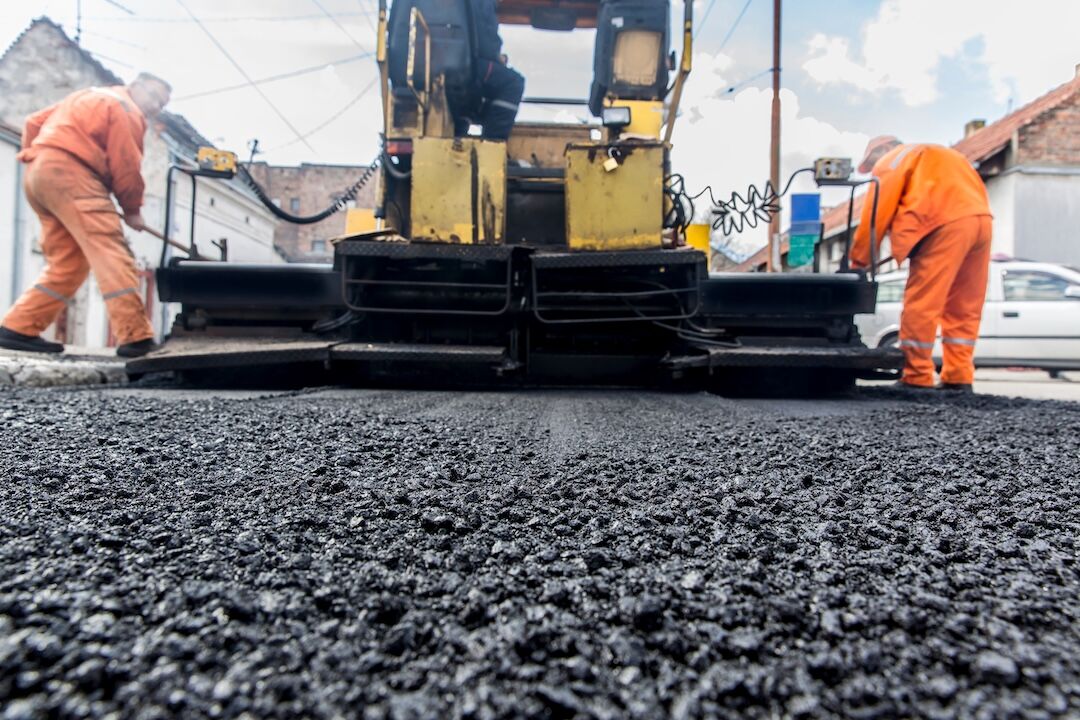
Resurfacing is not spraying liquid asphalt and rolling out a thin skim coat. That is a band-aid that fails in the first Texas freeze. A legitimate resurfacing project involves distinct structural phases:
- Edge and Transition Milling: Milling 1.5 to 2.0 inches deep along concrete transitions, curb lines, and handicap ramps to preserve drainage slopes and water flow lines.
- Full-Depth Base Repairs: Saw-cutting and excavating all alligator-cracked sections down to solid ground, re-compacting the stone base, and installing TxDOT Type B asphalt base flush with the milled grade.
- Crack Sealing and Surface Cleaning: Sealing working thermal cracks wider than one-quarter inch and power-sweeping all loose grit, oils, and fines off the pavement.
- Tack Coat Application: Spraying a uniform layer of polymer-modified asphalt emulsion (such as SS-1H) at a calibrated rate of 0.05 to 0.10 gallons per square yard. Tack coat is the hydraulic glue that bonds the old asphalt to the new layer.
- Wearing Course Installation: Laying a minimum of two compacted inches of dense-graded TxDOT Type D asphalt hot mix, compacted between 92 and 96 percent maximum theoretical density.
When Total Replacement Is the Only Defensible Option
When structural failure exceeds 35 percent, or when the subgrade has degraded to zero shear resistance, full reconstruction is necessary. Total replacement allows you to correct the root cause: the subgrade.
A true reconstruction in North Texas requires excavating the failed asphalt and stone, stabilizing the underlying Blackland clay, and building a new cross-section from the bottom up. For high-traffic commercial assets, that subgrade preparation often means incorporating 6 to 8 percent chemical lime slurry or Portland cement into the top six to eight inches of native soil. This chemical reaction breaks the clay's plasticity, stops the shrink-swell cycle, and creates a rigid, moisture-resistant working platform.
Over this stabilized subgrade, contractors place a heavy-duty biaxial geogrid, eight to ten inches of compacted flex base, and four inches of dense hot mix asphalt applied in two lifts (a Type B binder course followed by a Type D surface course). This structure carries a twenty-year design life under heavy truck traffic. Spending eighty thousand dollars to overlay a property with an active subgrade failure simply sets a countdown timer on total pavement collapse.
Frequently Asked Questions
How long will a commercial asphalt overlay last compared to a full replacement?
A properly engineered asphalt overlay on a sound, patched base will typically deliver eight to twelve years of service life in North Texas before requiring significant maintenance. A complete reconstruction, featuring a chemically stabilized subgrade and adequate base thickness, provides an engineered lifespan of twenty to twenty-five years with standard periodic maintenance.
Can you overlay a parking lot that has standing water problems?
No. An asphalt overlay mirrors the existing contour of the lot. While milling can cut down minor high spots, an overlay cannot fix major elevation errors, ponding, or birdbaths caused by settled subgrades. Drainage problems must be corrected by re-grading the stone base during full-depth repairs or during a total pavement reconstruction.
Will an overlay fix the alligator cracking across my drive lanes?
An overlay will only fix alligator cracking if those areas are cut out and rebuilt from the base up prior to paving. If you pave directly over alligator cracks without full-depth excavation, those cracks will reflect through the new surface within one to two years due to traffic load and moisture expansion in the subgrade.