Commercial · 6 min read
Retail Parking Lot Maintenance Phasing: Keep Tenants Open During Asphalt Repairs
Blackland Asphalt Team · November 10, 2026
Closing down a retail center for pavement work is not an option. If tenants cannot process transactions or customers cannot park within a reasonable walking distance of the front doors, property managers face lease disputes and lost revenue. Executing retail parking lot maintenance phasing correctly allows you to rebuild, resurface, and protect your commercial asphalt while keeping drive lanes flowing and storefronts accessible throughout the job.
In the Dallas-Fort Worth metroplex, pavement maintenance is not just cosmetic. The native Blackland Prairie clay underneath North Texas parking lots expands aggressively when wet and shrinks into deep fissures during hot, dry summers. This subgrade movement forces surface asphalt to flex, crack, and pull apart. If you ignore these surface fractures, rainfall penetrates straight to the clay subgrade, accelerating base failure and creating deep potholes. Keeping up with repairs is essential, but doing it on an active retail property demands strict operational planning.
The Real Cost of Improper Project Phasing
When a contractor treats a retail center like an empty industrial lot, chaos follows. Blocking main entrances without warning pushes traffic into adjacent neighborhoods or backs cars up onto frontage roads. Trapping delivery trucks behind tack coat or milling machines disrupts anchor tenants like grocery stores and pharmacies that rely on tight restocking schedules.
Poor planning also damages fresh asphalt. If customers or delivery drivers drive over hot-mix asphalt before it cools to ambient temperature, or cut across wet sealer because barricades were ambiguous, you end up with tire scuffing, power steering marks, and tracking across concrete pedestrian walkways. That ruins your curb appeal and wastes capital.
Professional phasing breaks the site into functional quadrants. By isolating work zones and establishing clear detours, property owners can complete comprehensive repairs through a proactive pavement maintenance program without sacrificing foot traffic.
Planning Principles for Retail Parking Lot Maintenance Phasing
Every shopping center has its own traffic rhythm. A strip center with a breakfast cafe peaks between 6:00 AM and 10:00 AM, while a neighboring restaurant and sports bar sees peak volume from 5:00 PM to midnight. Successful retail parking lot maintenance phasing matches construction schedules to tenant traffic patterns rather than the contractor's standard shift hours.
Dividing the Property into Operational Sectors
Most commercial retail parking lots should be split into three or four distinct phases. A typical layout isolates no more than 25 to 33 percent of the total parking stalls at any single time.
- Phase One covers primary perimeter ring roads and secondary entrances during lower-volume weekday mornings.
- Phase Two handles rear service corridors and loading docks, scheduled strictly around tenant delivery windows.
- Phase Three tackles front-row customer parking in alternating halves, ensuring customers always have direct line-of-sight access to entry doors.
- Phase Four finishes the remaining customer stalls and main entry aprons.
Never block both entrances to a retail strip simultaneously. If your center has two curb cuts, one must remain completely clear, clean, and free of heavy machinery while the other is prepped, milled, or paved.
Navigating Blackland Clay Moisture Windows
In North Texas, timing repairs around subgrade moisture is critical. Paving over shifting, saturated Blackland clay traps moisture within the aggregate base course. Under the weight of delivery trucks, trapped water creates hydraulic pressure that shatters the new asphalt mat from the bottom up. Phasing must allow adequate drying time between rain events and heavy asphalt milling or full-depth base repairs.
Night and Weekend Scheduling Strategies
Night work and weekend work cost more in crew labor rates, but they prevent daytime business disruption. For high-traffic retail corridors like those in Frisco, TX, running maintenance operations after normal business hours is often the only realistic way to manage traffic.
Overnight Milling and Inlay
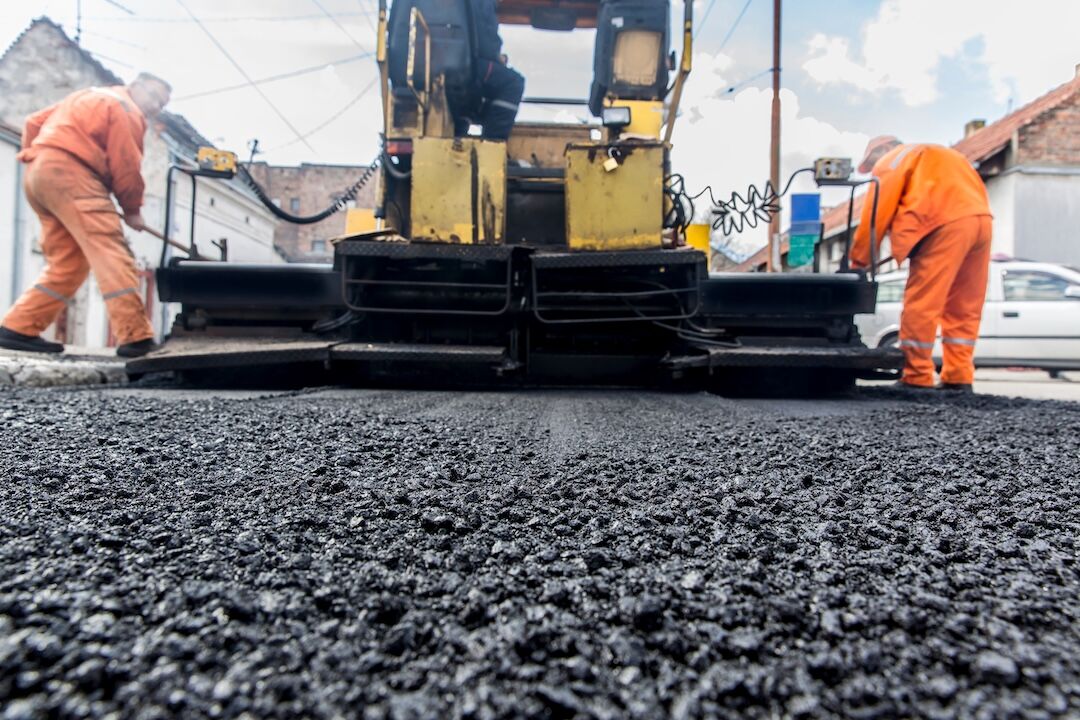
For high-traffic drive lanes showing severe rutting or fatigue cracking, asphalt milling followed by a hot-mix inlay is standard. Milling machines remove two inches of deteriorated surface layer between 8:00 PM and 2:00 AM. Crews sweep the milled surface, apply an SS-1h tack coat, and lay fresh Type D hot mix before 6:00 AM.
By the time morning commuters and opening retail staff arrive, the new asphalt mat has compacted to target density and cooled below 140 degrees Fahrenheit, which is the threshold required to carry vehicle traffic without surface deformation.
Weekend Sectioning for Surface Treatments
Liquid coatings require a different approach. Commercial sealcoating services protect oxidized asphalt binders from ultraviolet breakdown and chemical spills, but the emulsion needs time to cure. While hot asphalt cools in a few hours, coal tar or asphalt emulsion sealers need 24 to 48 hours of cure time under North Texas humidity levels to prevent tire tracking.
To manage this, split the property into opposing halves over consecutive weekends. Close Section A on Friday night at 9:00 PM, apply two coats of polymer-modified sealer on Saturday morning, stripe on Sunday afternoon, and reopen at 6:00 AM Monday. Repeat the exact process for Section B the following weekend. Customers always have half the lot available, and the coating cures completely before taking wheel loads.
Tenant Communication and Traffic Logistics
A phasing plan looks great on paper, but it fails if store managers are surprised on Monday morning. Retail tenants require written notice at least seven business days before heavy equipment mobilizes, followed by a 48-hour reminder.
Provide tenants with a color-coded site plan showing:
- The exact dates and hours each parking phase is closed
- Designated employee parking zones moved to the perimeter to free up front stalls
- Temporary routes for box trucks, freight carriers, and trash pickup
- Clearly marked pedestrian corridors with ADA-compliant access paths
On the ground, rely on heavy-duty, orange-and-white traffic barrels and high-visibility barrier tape. Cheap wooden sawhorses or low-profile traffic cones get blown over by Texas wind or moved by frustrated motorists looking for a spot. Signage must clearly direct customers toward open stalls and active store entrances.
Keeping Pedestrian and ADA Pathways Compliant
The Americans with Disabilities Act does not pause for parking lot maintenance. If you close an ADA parking stall or block the primary ramp to a storefront during work, you must provide an accessible alternative route immediately.
During retail repairs, configure temporary handicap stalls in the nearest open, level bay. These spaces must be clearly marked with temporary post-mounted signs and must provide an unobstructed path to the entrance with a cross slope no steeper than 1:48 (2 percent).
When restriping after paving or sealcoating, apply premium traffic paint that meets Texas Department of Transportation specifications. Using cheap, unthinned latex paint that flakes off after four months of shopping cart traffic is a bad buy. Invest in chlorinated rubber or fast-dry acrylic traffic paints paired with retroreflective glass beads for long-term durability.
Frequently Asked Questions
How much notice should retail tenants receive before parking lot repairs begin?
Property managers should give retail tenants a full written schedule at least one week in advance, followed by physical reminders placed on store doors 48 hours prior to work. Clear communication prevents delivery conflicts and allows store managers to notify employees where to park so customer spaces remain open.
How soon can cars drive on newly paved or sealed asphalt?
Hot-mix asphalt overlays can typically take passenger vehicle traffic within four to six hours, provided the surface temperature of the asphalt has cooled below 140 degrees Fahrenheit. Emulsion-based sealcoating requires a minimum of 24 hours to cure under direct Texas sunlight, or up to 48 hours in shaded areas or during humid conditions, before vehicles can turn their wheels without leaving marks.
Why does North Texas soil cause shopping center parking lots to fail faster?
The Dallas-Fort Worth area sits on high-plasticity Blackland Prairie clay, which swells significantly when wet and shrinks during dry spells. This constant subgrade expansion and contraction creates movement underneath the asphalt, opening cracks that allow surface water to wash out the rock base and create structural potholes if not addressed early.